 80-20+
Before Asking What Public Ownership Costs, Ask What It Has Produced
Five times, countries that started alike split on public ownership. The results point the same way.
- →Where countries that started alike split on public ownership, the publicly owned economy did worse in every case.
- →Planned economies often kept growing but fell behind; East Germany was passed by countries that started out poorer.
- →Where public ownership came with dictatorship, the law protecting property and speech was far weaker, and in Venezuela it gave way before the economy did.
- →Britain chose public ownership in free elections, kept its freedoms, and still grew the slowest of any large Western European economy.
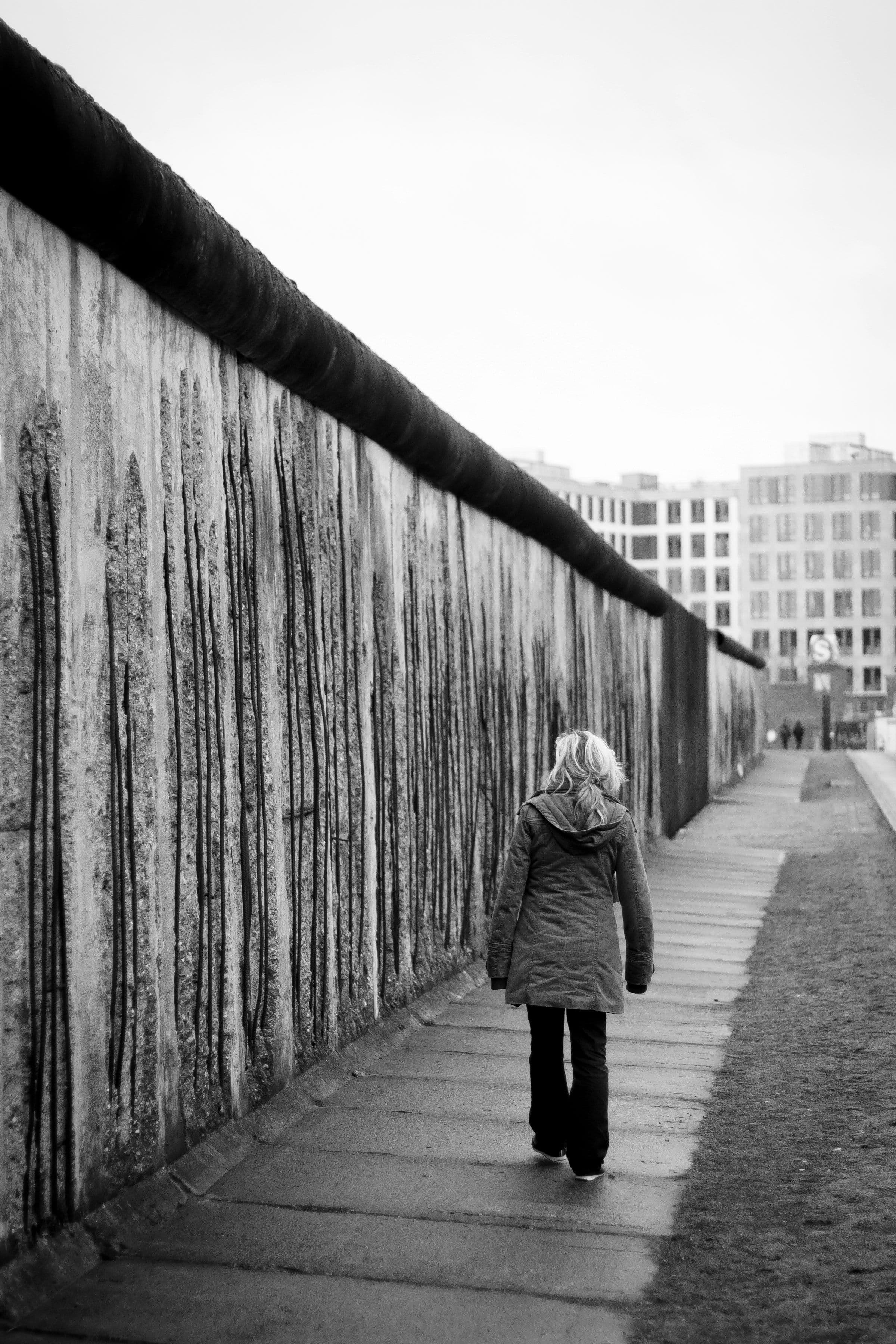
In 1961, East Germany built a wall. It faced inward. Its job was to keep East Germans in. Over four decades, close to one in six East Germans left for the West anyway, most of them before the wall went up.
Those people were leaving an economy the state owned and ran. Today the Democratic Socialists of America call for public ownership of the largest corporations and essential industries. Supporters argue fairness, opponents answer with freedom, and both skip the question East Germans answered by leaving: What has public ownership produced where it was tried?
Five times since the Second World War, countries that shared a history, a language or a starting point made opposite choices about who owns industry: East and West Germany, North and South Korea, Estonia and Belarus, Venezuela and Chile, and Britain and West Germany. Each time, the country that chose public ownership of the economy did worse.
In four of the five, that country was also a dictatorship, with far weaker protection for property and speech. In the fifth, voters chose public ownership freely and got similar economic results.
The economic gap starts with prices. A price tells a farmer what to plant and a shopkeeper what to stock to make a living. Ludwig Erhard, who ran economic policy in the American and British zones of postwar Germany and later became its second Chancellor, held that when government holds prices below what buyers would pay, people lose the reason to produce and sell. Those zones ended most price controls in a single day in June 1948. East Germany kept setting prices for four more decades.
East Germany's economy grew under that system but fell behind: Greece, Japan and Portugal, all poorer at the start, passed it.
Even that picture is probably too kind, for two reasons. Output is measured by adding up what a country makes at the prices it sells for, and East Germany's government set its own prices. Its Trabant, a small, outdated car, was priced about like a West German Volkswagen, so the statistics count a Trabant as equivalent output as a Volkswagen, though it was known as one of the worst cars ever made.
The second reason is that the government that set the prices also reported the numbers, and it had every reason to inflate them. Both errors make East Germany's economy look bigger than it was.
The law can go even before the economy does. Taking over an industry means changing or setting aside the laws that protect its owners, and owners who resist must be suppressed. Venezuela illustrates this. Within two years of Hugo Chávez's election in 1998, independent ratings of Venezuela's laws and courts had fallen from middling to poor.
Its economy still sat near its 1998 level then, and output did not peak until 2012, when oil prices were high. The collapse came after. In 1998, Venezuela and Chile produced nearly the same amount per person. By 2022, Chile produced about four times as much.
The natural reply is that these are stories about dictatorship. A comparison of Britain and West Germany shows this is not true. In 1945, British voters elected a government that nationalized much of its economy while West Germany moved to a free market one. The British policy survived four changes of government. Its economy still grew far more slowly than not only West Germany’s, but also than any other large economy in Western Europe from 1950 to 1979. Voters chose the system but could not choose the results.
Free markets do not guarantee freedom. In the 1970s and 1980s, Chile had a market economy under Augusto Pinochet's military government, and in 1980 it rated lower on free expression than communist China, Cuba, or Vietnam.
Five comparisons are evidence, not proof. However, the record runs one way. Not one of the five comparisons favors public ownership. A free people can still decide that something matters more to it than a faster economy, but it should not be asked to make that choice without being told what the costs are likely to be.
For a family in Western Pennsylvania, that cost would not necessarily arrive as economic collapse. It would arrive as slower growth in their children's paychecks and weaker protection for owning a house, growing a retirement account, or the ability to start and run a small business. In the United States, the government would also have to change the Constitution or break the law to take over entire industries, thus weakening the legal system that protects your economic well-being.
East Germany's government could set the price of a Trabant and nearly everything else in its shops, and it could publish whatever figures it liked. It could not set what its own people made of the result. They knew the cost, which is why the wall faced inward.
Self-government rests on consent, and consent means little when the cost of major proposed changes is hidden. Where comparable countries chose public ownership, the results ran one way every time: slower growth, and where it came with dictatorship, weaker protection for property and speech. A free people may weigh that record against what it values, but only if it is told the record honestly, including that taking an industry means changing or setting aside the law that protects a family's home, savings and business.
- Close to one in six East Germans left for the West between 1949 and 1989; the Berlin Wall was built in 1961 to stop them.
- East Germany produced about half as much per person as West Germany in both 1950 and 1989 and fell further behind, but this likely overstates East German output.
- North Korea's output per person in 2022 was 36 percent below its 1990 level; South Korea's tripled over the same years.
- Venezuela and Chile produced nearly the same amount per person in 1998; by 2022 Chile produced about 4.3 times as much.
- From 1990 to 2022, Estonia added roughly 1.8 times as much output per person as Belarus, which kept a state-run economy.
- From 1950 to 1979, British output per person grew 90 percent; West Germany's grew 261 percent.
- →Close to one in six East Germans left for the West, and in 1961 their government built the Berlin Wall to stop them.
- →In 1998 Venezuela and Chile produced about the same per person; by 2022 Chile produced about four times as much.
- →Within two years of Hugo Chávez's 1998 election, expert ratings of how well Venezuela's laws and courts protected its people had fallen from middling to poor, years before its economy collapsed.
- →Britain voted for public ownership in 1945 and kept it through four changes of government; from 1950 to 1979 it grew more slowly than any other large Western European economy.
- →In none of these five comparisons did public ownership come out ahead of or even with the market economy it was compared to.
Related issues
- FoundationsIs the Rule of Law Eroding in America?
Leaders of both parties have gone around Congress and aimed law enforcement at their opponents, and so far the courts have held the line.
Oct 1, 2026 · 5 min - FoundationsWhat is the Rule of Law?
Like a sound roof, the rule of law goes unnoticed until it fails.
Aug 21, 2026 · 4 min - SocialismBritain Voted for Public Ownership. West Germany Didn't. Thirty Years Later, the Gap Was Clear.
Same freedoms, same alliance, both rebuilding from the war. Different owners, and very different results.
Oct 12, 2026 · 4 min
Stay informed
Plain-language explainers and sourced updates, in your inbox. No spin, unsubscribe anytime.